---
title: How do you optimise nitrogen management in food industry wastewater treatment plants?
description: Cómo gestionar de manera óptima el nitrógeno en las plantas de depuración de aguas residuales de la industria alimentaria
image: https://blog.kruger.dk/hubfs/VWT%20ITALY/Blog%20VWT%20Italy/Blog%20-%20featured%20image%20-%20HUBSPOT.png
---
Resourcing the world
- [Aktuelt](https://www.kruger.dk/nyheder)
- Aktuelt
- [Messer og events](https://www.kruger.dk/aktuelt/messer-og-events)
- [Nyheder og presse](https://www.kruger.dk/nyheder)
- [Blog](https://blog.kruger.dk/da-dk?__hstc=99837508.9c4831dbee60c8e899b9df050cc9aee5.1768116275728.1773672147492.1773820542654.3&__hssc=99837508.2.1773820542654&__hsfp=0cdbfa88b9d4ce12297fd963c94b3b75&hsLang=en-ee)
- [Karriere](https://www.kruger.dk/om-os/arbejde-hos-kruger)
- Karriere
- [Ledige stillinger](https://www.kruger.dk/job)
- [Ansøgningsproces](https://www.kruger.dk/om-os/arbejde-hos-kruger/ansoegningsproces)
- [Studerende og nyuddannede](https://www.kruger.dk/studerende-og-nyuddannede)
- [Mød vores medarbejdere](https://www.kruger.dk/om-os/arbejde-hos-kruger/moed-vores-medarbejdere)
- [Om os](https://www.kruger.dk/om-kruger)
- Om os
- [Vores forretning](https://www.kruger.dk/om-os/vandteknologier-den-groenne-omstilling)
- Vores forretning
- [FN's Verdensmål](https://www.kruger.dk/om-os/vores-forretning/fns-verdensmaal)
- [Samfundsansvar](https://www.kruger.dk/om-os/vores-forretning/samfundsansvar)
- [Mød direktionen](https://www.kruger.dk/om-os/vores-forretning/moed-direktionen)
- [Nøgletal](https://www.kruger.dk/om-os/vores-forretning/noegletal)
- [Kvalitetsledelse](https://www.kruger.dk/om-os/vores-forretning/kvalitetsledelse)
- [Miljøledelse](https://www.kruger.dk/om-os/vores-forretning/miljoeledelse)
- [Etik og compliance](https://www.kruger.dk/om-os/vores-forretning/etik-og-compliance)
- [Veolia Water Technologies](https://www.veoliawatertechnologies.com/en/about-us)
- Veolia Water Technologies
- [GreenUp Strategy](https://www.veoliawatertechnologies.com/en/greenup)
- [Investor Relations](https://www.veolia.com/en/veolia-group/finance)
- [Locations](https://www.veoliawatertechnologies.com/en/about-us/veolia-water-technologies/veolia-water-technologies-around-world)
- [Kontakt os](https://www.kruger.dk/kontakt)
- [English](https://www.kruger.dk/english)
EN
EN [DA](https://blog.kruger.dk/da-dk?hsLang=da-dk) [SV](https://blog.kruger.dk/sv-se?hsLang=sv-se)
Danmark
Worldwide
- [Veolia Water Technologies](https://www.veoliawatertechnologies.com/?__hstc=20406439.c30bbdf96aed3276d409c7b610a3eb83.1690796041704.1691147977051.1691152458710.13&__hssc=20406439.2.1691152458710&__hsfp=1923905660)
Regional sites
- [Australia](https://www.anz.veoliawatertechnologies.com/?__hstc=20406439.c30bbdf96aed3276d409c7b610a3eb83.1690796041704.1691147977051.1691152458710.13&__hssc=20406439.2.1691152458710&__hsfp=1923905660)
- [Belgium](https://www.veoliawatertechnologies.be/)
- [Canada](http://www.veoliawatertechnologies.ca/)
- [China](http://www.veoliawatertechnologies.com.cn/)
- [Denmark](https://www.kruger.dk/)
- [Deutschland](https://www.veoliawatertechnologies.de/)
- [España](http://www.veoliawatertechnologies.es/?__hstc=20406439.c30bbdf96aed3276d409c7b610a3eb83.1690796041704.1691147977051.1691152458710.13&__hssc=20406439.2.1691152458710&__hsfp=1923905660)
- [Finland](https://www.veoliawatertechnologies.fi)
- [France](https://www.veoliawatertechnologies.fr/fr?__hstc=20406439.c30bbdf96aed3276d409c7b610a3eb83.1690796041704.1691147977051.1691152458710.13&__hssc=20406439.2.1691152458710&__hsfp=1923905660)
- [Ireland](https://www.veoliawatertechnologies.ie/?__hstc=20406439.c30bbdf96aed3276d409c7b610a3eb83.1690796041704.1691147977051.1691152458710.13&__hssc=20406439.2.1691152458710&__hsfp=1923905660)
- [Italia](http://www.veoliawatertechnologies.it/?__hstc=20406439.c30bbdf96aed3276d409c7b610a3eb83.1690796041704.1691147977051.1691152458710.13&__hssc=20406439.2.1691152458710&__hsfp=1923905660)
- [Latin America](https://www.veoliawatertechnologies.com/latam/es?__hstc=20406439.c30bbdf96aed3276d409c7b610a3eb83.1690796041704.1691147977051.1691152458710.13&__hssc=20406439.2.1691152458710&__hsfp=1923905660)
- [Middle-East](https://middle-east.veoliawatertechnologies.com/?__hstc=20406439.c30bbdf96aed3276d409c7b610a3eb83.1690796041704.1691147977051.1691152458710.13&__hssc=20406439.2.1691152458710&__hsfp=1923905660)
- [Nederland](http://www.veoliawatertechnologies.nl/?__hstc=20406439.c30bbdf96aed3276d409c7b610a3eb83.1690796041704.1691147977051.1691152458710.13&__hssc=20406439.2.1691152458710&__hsfp=1923905660)
- [Norge](http://www.krugerkaldnes.no/)
- [North America](http://www.veoliawatertech.com/?__hstc=20406439.c30bbdf96aed3276d409c7b610a3eb83.1690796041704.1691147977051.1691152458710.13&__hssc=20406439.2.1691152458710&__hsfp=1923905660)
- [Polska](http://www.veoliawatertechnologies.pl/?__hstc=20406439.c30bbdf96aed3276d409c7b610a3eb83.1690796041704.1691147977051.1691152458710.13&__hssc=20406439.2.1691152458710&__hsfp=1923905660)
- [South East Asia](http://www.veoliawatertechnologies.com/asia?__hstc=20406439.c30bbdf96aed3276d409c7b610a3eb83.1690796041704.1691147977051.1691152458710.13&__hssc=20406439.2.1691152458710&__hsfp=1923905660)
- [Sverige](http://www.veoliawatertechnologies.se/)
- [United Kingdom](https://www.veoliawatertechnologies.co.uk/?__hstc=20406439.c30bbdf96aed3276d409c7b610a3eb83.1690796041704.1691147977051.1691152458710.13&__hssc=20406439.2.1691152458710&__hsfp=1923905660)
Speciality brands
- [AnoxKaldnes](https://www.anoxkaldnes.com)
- [Aquaflow](https://www.aquaflow.fi)
- [Biothane](https://www.biothanesolutions.com)
- [ELGA](https://www.elgalabwater.com/?__hstc=20406439.c30bbdf96aed3276d409c7b610a3eb83.1690796041704.1691147977051.1691152458710.13&__hssc=20406439.2.1691152458710&__hsfp=1923905660)
- [EVALED](https://www.evaled.com/)
- [Entropîe](https://www.entropie.com)
- [HPD](http://www.veoliawatertech.com/?__hstc=20406439.c30bbdf96aed3276d409c7b610a3eb83.1690796041704.1691147977051.1691152458710.13&__hssc=20406439.2.1691152458710&__hsfp=1923905660)
- [Hydrotech](https://www.hydrotech.se)
- [MPP Systems](https://www.veoliawatertechnologies.com/en/solutions/technologies/macro-porous-polymer-extraction-mppe)
- [OTV](http://www.otv.fr/)
- [PMT](https://www.pmtwatersolutions.com/)
- [SIDEM](http://www.sidem-desalination.com/)
- [Westgarth](http://www.vwswestgarth.com/)
- [Whittier](http://www.veoliawatertech.com/?__hstc=20406439.c30bbdf96aed3276d409c7b610a3eb83.1690796041704.1691147977051.1691152458710.13&__hssc=20406439.2.1691152458710&__hsfp=1923905660)
-
- [Brancher](https://www.kruger.dk/brancher)
- Brancher
- [Afløb og regnvand](https://www.kruger.dk/brancher/afloeb-og-regnvand)
- Afløb og regnvand
- [Hydrauliske analyser](https://www.kruger.dk/brancher/afloeb-og-regnvand/hydrauliske-analyser)
- [Reduktion af overløb](https://www.kruger.dk/brancher/afloeb-og-regnvand/reduktion-af-overloeb)
- [Klimatilpasning](https://www.kruger.dk/brancher/afloeb-og-regnvand/klimatilpasning)
- [Regnvandshåndtering](https://www.kruger.dk/brancher/afloeb-og-regnvand/helhedsloesninger-til-regnvandshaandtering)
- [Planlægning og undersøgelser](https://www.kruger.dk/brancher/afloeb-og-regnvand/planlaegning-og-undersoegelser)
- [Projektering og tilsyn](https://www.kruger.dk/brancher/afloeb-og-regnvand/projektering-og-tilsyn-af-afloebstekniske-anlaeg)
- [Styring og varsling](https://www.kruger.dk/brancher/afloeb-og-regnvand/styring-og-varsling)
- [Udstyr og teknologier](https://www.kruger.dk/brancher/afloeb-og-regnvand/udstyr-og-teknologier-til-afloebssystemer)
- [Service](https://www.kruger.dk/brancher/afloeb-og-regnvand/service-paa-afloebstekniske-anlaeg)
- [Ejendomme](https://www.kruger.dk/brancher/ejendomme)
- Ejendomme
- [Blødgøringsanlæg](https://www.kruger.dk/brancher/ejendomme/bloedgoeringsanlaeg)
- [Katodisk beskyttelse](https://www.kruger.dk/brancher/ejendomme/katodisk-beskyttelse)
- [Korrosionsbeskyttelse](https://www.kruger.dk/brancher/ejendomme/korrosionsbeskyttelse)
- [Legionellabekæmpelse](https://www.kruger.dk/legionella)
- [Rensning af affaldsskakte](https://www.kruger.dk/brancher/ejendomme/rensning-af-affaldsskakte)
- [Rensning og afsyring](https://www.kruger.dk/brancher/ejendomme/rensning-afsyring-og-afkalkning)
- [Hospitaler](https://www.kruger.dk/hospitaler)
- [Industri](https://www.kruger.dk/brancher/industriens-vandbehandling)
- Industri
- [Biotek og pharma](https://www.kruger.dk/brancher/industri-listing-page/biotek-og-farmaceutisk-industri)
- [Fødevarer og bryggerier](https://www.kruger.dk/brancher/industri/foedevarer-og-bryggerier)
- [Hoteller og restaurationer](https://www.kruger.dk/brancher/industri/hoteller-og-restaurationer)
- [Kraftvarmeværker](https://www.kruger.dk/brancher/industri/kraftvarmevaerker)
- [Laboratorier](https://www.kruger.dk/laboratorier)
- [Olie og gas](https://www.kruger.dk/brancher/industri/olie-og-gasindustrien)
- [Overfladevand og Jern & Metal](https://www.kruger.dk/brancher/industri/overfladebehandling-og-jern-metal)
- [Jordoprensning](https://www.kruger.dk/brancher/forureningsoprensning)
- [Kommune](https://www.kruger.dk/brancher/kommune)
- Kommune
- [Klimatilpasning](https://www.kruger.dk/klimatilpasning)
- [Rent badevand](https://www.kruger.dk/brancher/kommune/rent-badevand)
- [Spildevandsplanlægning](https://www.kruger.dk/brancher/kommune/planlaegning-strategi-og-struktur)
- [Svømmehaller](https://www.kruger.dk/brancher/kommune/svoemmehaller-og-sportshaller)
- [Renseanlæg](https://www.kruger.dk/brancher/renseanlaeg)
- Renseanlæg
- [Grøn omstilling på renseanlægget](https://www.kruger.dk/brancher/renseanlaeg/4-skridt-mod-en-groen-omstilling-paa-renseanlaeg)
- [Klimaopgørelse](https://www.kruger.dk/brancher/renseanlaeg/klimaopgoerelse)
- [Ressourceudnyttelse](https://www.kruger.dk/brancher/renseanlaeg/ressourceudnyttelse-og-cirkulaer-oekonomi)
- [Rådgivning](https://www.kruger.dk/brancher/renseanlaeg/raadgivning)
- [Entreprise](https://www.kruger.dk/brancher/renseanlaeg/entreprise-renseanlaeg)
- [Projektering og tilsyn](https://www.kruger.dk/brancher/renseanlaeg/projektering-og-tilsyn)
- [Udstyr og teknologier](https://www.kruger.dk/brancher/renseanlaeg/udstyr-og-teknologier-til-renseanlaeg)
- [Service](https://www.kruger.dk/brancher/renseanlaeg/spildevandsservice-teknologier)
- [Styring og overvågning](https://www.kruger.dk/brancher/renseanlaeg/styring-og-overvaagning-af-renseanlaeg)
- [Vandforsyning](https://www.kruger.dk/brancher/vandforsyning)
- Vandforsyning
- [Blødgøring](https://www.kruger.dk/brancher/vandforsyning/bloedgoering)
- [Cybersikkerhed på vandværket](https://www.kruger.dk/brancher/vandforsyning/cybersikkerhed-paa-vandvaerket)
- [DDS og egenkontrol](https://www.kruger.dk/brancher/vandforsyning/dokumenteret-drikkevandssikkerhed-og-egenkontrol)
- [Distribution af drikkevand](https://www.kruger.dk/brancher/vandforsyning/distribution-af-drikkevand)
- [Grundvand og kildepladser](https://www.kruger.dk/brancher/vandforsyning/grundvand-og-kildepladser)
- [Nyt vandværk](https://www.kruger.dk/brancher/vandforsyning/nyt-vandvaerk)
- [Procesgennemgang](https://www.kruger.dk/brancher/vandforsyning/procesgennemgang)
- [Renovering af vandværker](https://www.kruger.dk/brancher/vandforsyning/renovering-af-vandvaerker)
- [Rensning for pesticider i drikkevand](https://www.kruger.dk/brancher/vandforsyning/rensning-pesticider-i-drikkevand)
- [Service og drift](https://www.kruger.dk/brancher/vandforsyning/service-og-drift-af-vandvaerker)
- [SRO og digitale løsninger](https://www.kruger.dk/brancher/vandforsyning/sro-og-digitale-loesninger)
- [Teknologier til produktion af drikkevand](https://www.kruger.dk/brancher/vandforsyning/teknologier-til-produktion-af-drikkevand)
- [Videregående Vandbehandling](https://www.kruger.dk/brancher/vandforsyning/videregaaende-vandbehandling)
- [Teknologier og service](https://www.kruger.dk/industri-listing-page/teknologier-og-loesninger)
- Teknologier og service
- [Teknologier A-Z](https://www.kruger.dk/teknologier-og-service/teknologier-z)
- [Services](https://www.kruger.dk/teknologier-og-service/services)
- Services
- [Hubgrade Digital Services](https://www.kruger.dk/hubgrade-digital-solutions)
- [Mobile Water Services](https://info.kruger.dk/mobilewaterservices?__hstc=99837508.9c4831dbee60c8e899b9df050cc9aee5.1768116275728.1773672147492.1773820542654.3&__hssc=99837508.2.1773820542654&__hsfp=0cdbfa88b9d4ce12297fd963c94b3b75&hsLang=en-ee)
- [Spildevandsservice](https://www.kruger.dk/brancher/renseanlaeg/spildevandsservice-teknologier)
- [Industri- og ejendomsservice](https://www.kruger.dk/teknologier-og-service/services/industri-og-ejendomsservice)
- [Infocenter](https://www.kruger.dk/infocenter-uden-hoejre-spalte)
- Infocenter
- [Projekter](https://www.kruger.dk/infocenter/projekter)
- [Brochurer](https://www.kruger.dk/infocenter/brochurer)
Search
EN
EN [DA](https://blog.kruger.dk/da-dk?hsLang=da-dk) [SV](https://blog.kruger.dk/sv-se?hsLang=sv-se)
[ Back](https://blog.kruger.dk)
# How do you optimise nitrogen management in food industry wastewater treatment plants?

by Veolia Water Technologies
19 April 2026
2 minutes read
[ Back](https://blog.kruger.dk) Follow
Connect with us
Food industry companies, especially those in high water-consumption segments such as the meat and dairy industry, face multiple challenges: strictly complying with national directives, anticipating regulatory changes, and turning production waste into business opportunities.
Wastewater generated by the food industry does not only come from production processes, but also from water used in cleaning operations and, in general, from all water used in the facilities.
For this reason, the composition of wastewater presents considerable variability, depending on the seasons and production processes. This water is usually rich in nutrients, mainly carbonaceous organic matter (COD - Chemical Oxygen Demand and BOD - Biochemical Oxygen Demand), as well as nitrogen and phosphorus.
## Managing nitrogen in wastewater
Although anaerobic treatments are highly efficient at removing a large proportion of biodegradable COD, their main limitation lies in their reduced capacity to remove nutrients such as nitrogen and phosphorus.
Companies must therefore pay close attention to the discharge limits established for nitrogen compounds (ammonia, nitrates, nitrites, organic nitrogen, and total nitrogen) as well as phosphorus. It is essential to carefully evaluate the need to incorporate biological nitrification/denitrification and phosphorus removal processes into the treatment chain, for example, downstream of anaerobic processes.
In terms of nitrogen management, combined nitrification and denitrification processes convert ammoniacal nitrogen into gaseous nitrogen. Of these two biological processes, nitrification is undoubtedly the slower, which has a significant impact on the total reactor volumes required for treatment and, consequently, on the level of capital investment needed. In addition to their slow growth rate, nitrifying bacteria are extremely sensitive to temperature variations and to the qualitative and quantitative fluctuations that are characteristic of food industry wastewater. Treatment plants are likely to experience periods during which effluent nitrogen concentrations become unstable and fail to meet regulatory limits. Another common scenario is that the productive capacity of a facility becomes constrained precisely by the nitrogen removal capacity of its treatment plant.
Today's technology market offers solutions capable of increasing treatment capacity and stability without expanding existing biological reactor volumes, for example by enhancing the performance of conventional activated sludge plants. For new treatment installations, it is possible to implement compact and efficient technologies from the outset, reducing civil construction requirements and minimising the footprint of the treatment facility.
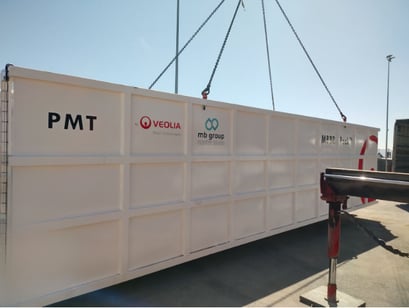
The AnoxKaldnes™ MBBR (Moving Bed Biofilm Reactor) and AnoxKaldnes Hybas™ (hybrid biofilm and activated sludge system) biological systems are widely used in food industry wastewater treatment, owing to their high efficiency per unit volume, greater stability in response to wastewater variations, and the ability to be integrated into existing infrastructure to safely and rapidly increase treatment capacity.
The implementation of AnoxKaldnes™ treatment systems can typically double the treatment capacity of an existing conventional activated sludge plant, and reduce reactor volumes by up to 70% in new installations.
## Conclusions
Environmental sustainability has become a strategic factor for many companies, especially those in the food industry, which have traditionally valued their connection to the local territory and the development of a circular economy. In the European context, EU directives on wastewater treatment and the objectives of the European Green Deal are driving industries to adopt more efficient and sustainable technologies. Various European and national funding programmes offer significant incentives to support modernisation and optimisation projects for treatment plants, facilitating the transition towards more efficient processes such as those described in this article. Investment in these technologies not only ensures regulatory compliance, but also represents an opportunity to improve competitiveness and reduce the environmental impact of industrial operations.
Ready to optimise nitrogen management in your plant?
[](https://blog.kruger.dk/hs/cta/wi/redirect?encryptedPayload=AVxigLKdO%2Bfloy6UV8nF16t5BBNAN9c6bM2T4fuPe5AKcTt8%2Bl%2F5Hjal0TWPEBodn47WCMw8Ap8I0WPusGqwRaywmlLrNcEGnBG0d2A8pJb53OcA8dOXozbVrRGr7UTuKyectO%2FgigiRBS%2BwPi%2BgpTkb%2BzPHL8DYLMEGrSgsbfd9TBDX2KYiZzf8N0whzvtmMDjlbHHkw2t1hUxDMKM%3D&webInteractiveContentId=383971093753&portalId=25605683&hsLang=en-ee)
## Tags
## Related articles

## Sign up to blog notifications
Receive the latest blog updates.
{|error|}
By checking this box, you agree to **Veolia Water Technologies's** [Privacy Policy](https://www.veoliawatertechnologies.com/en/privacy-policy-veolia-water-technologies) and you agree to receive information on our products and services.
Keep me informed
## Thank you for subscribing.
Please note that you can update your **preferences** at any time.
Return to blog
Note: If you do not receive any emails, please check your junk folder.
TOP
```json
{
"@context" : "https://schema.org",
"@type" : "BlogPosting",
"author" : {
"@type" : "Person",
"name" : "Veolia Water Technologies",
"url" : "https://blog.kruger.dk/author/veolia-water-technologies"
},
"dateModified" : "2026-04-19T17:44:02.471Z",
"datePublished" : "2026-04-19T17:43:07.000Z",
"headline" : "How do you optimise nitrogen management in food industry wastewater treatment plants?",
"image" : [ "https://blog.kruger.dk/hubfs/VWT%20ITALY/Blog%20VWT%20Italy/Blog%20-%20featured%20image%20-%20HUBSPOT.png" ],
"mainEntityOfPage" : {
"@id" : "https://blog.kruger.dk/how-to-optimise-nitrogen-management-in-food-industry-wastewater-treatment-plants",
"@type" : "WebPage"
},
"publisher" : {
"@type" : "Organization",
"logo" : {
"@type" : "ImageObject",
"url" : "https://blog.kruger.dk/hubfs/header-logo.png"
},
"name" : "Veolia Water Technologies"
}
}
```