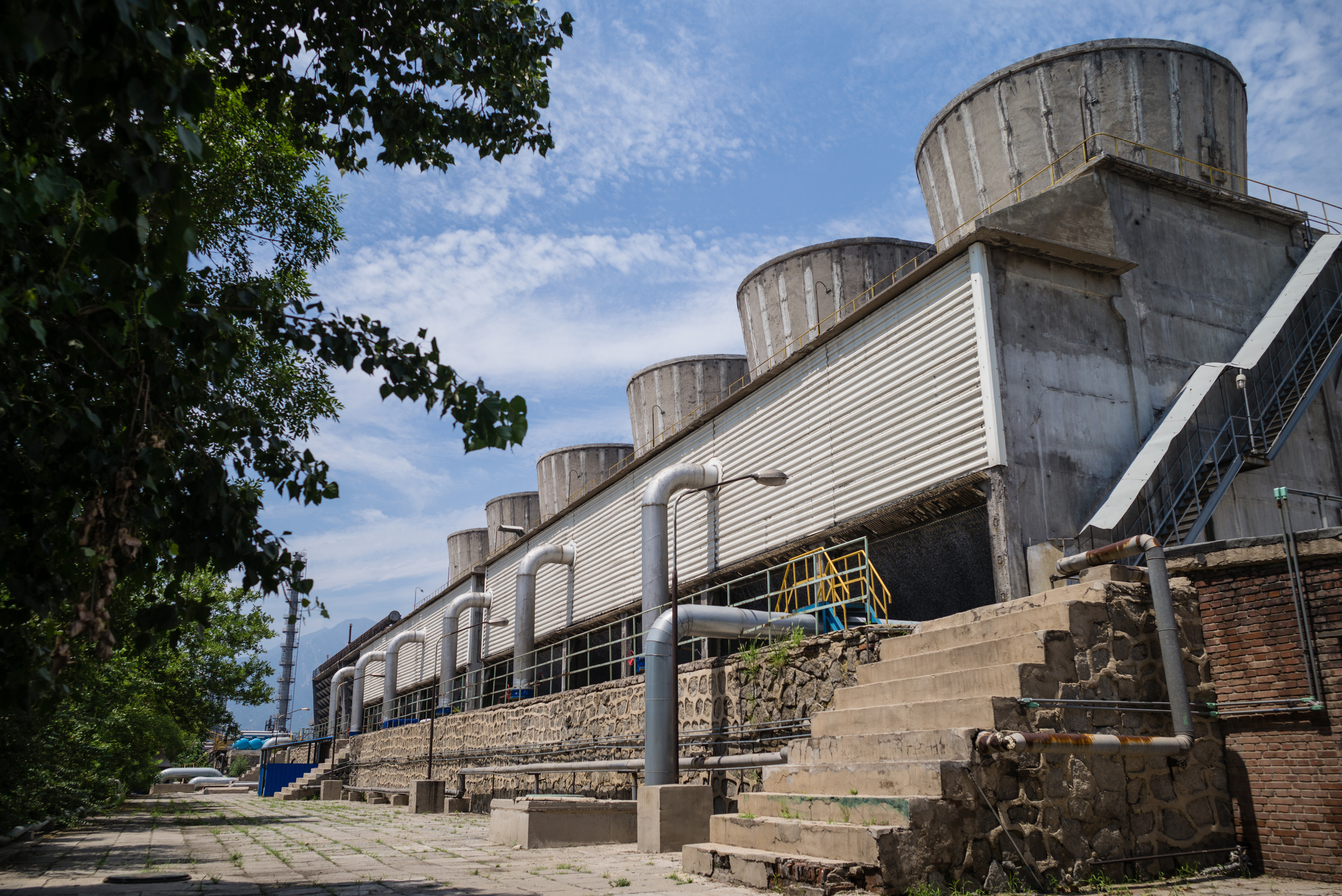


Industrial cooling towers silently consume vast amounts of resources in facilities worldwide. These installations can account for up to 80% of a site’s water consumption (in certain sectors) while also demanding considerable energy input. As environmental and economic pressures increase given state commitments to carbon neutrality by 2050, it is essential for operators to adopt the best strategies. Transforming cooling applications and generating a sustainable return on investment is possible: here's how.
Navigating the complexity
Within the everyday responsibilities of an industrial facility manager, cooling system operation is becoming progressively more complex.
- International commitments to carbon neutrality by 2050, with intermediate emission reduction targets in Europe by 2030, are imposing increasing constraints on these often energy-intensive systems dependent on limited water resources.
- Environmental regulations are tightening on substances such as phosphorus, zinc, and azole, as well as on thermal discharges, water withdrawals, and energy efficiency.
- The economic context and price volatility only make the need for cost optimisation and profitability more imperative.
Today, only taking into account all of these interdependent aspects – compliance, productivity, impacts, profitability – will allow manufacturers to undertake a sustainable transformation of their cooling applications.
Recognizing the urgency
Without swift action, the risks are significant, and not only economic:
Non-adherence to environmental regulations can trigger hefty fines (up to 2% of annual revenue for compliance breaches), damage to reputation, and business interruptions.
A poorly designed and operated cooling system will lead to excessive energy consumption and high operating costs. With energy potentially representing 80% of a tower's OPEX, the need for optimal management is clear.
Given that cooling systems are the first or second largest water consumer at an industrial site, a poor water treatment strategy will also inevitably have serious consequences.
With the innovative film forming cooling water treatment even the most challenging heat exchangers (high temperature, low flow) can be kept at maximum capacity minimising the risk of production limitation.
Selecting the right partner
To turn these challenges into opportunities and to support you on the path to sustainability and carbon neutrality, Veolia offers a global approach that goes beyond a conventional chemical program: Cooling Horizon 2030.
Cooling Horizon 2030 integrates three areas of focus:
- Our increasingly innovative treatments, meeting or anticipating every regulatory change:
such as E.C.O.Film*, a competitive treatment without phosphorus or zinc,
and the biodegradable HYP 1500 bleach stabilizer. - Our Insight* digital solutions for intelligent monitoring of treatment performance and compliance, as well as their sustainability benefits.
- Our proven expertise in environmental assessment and value creation: to identify and calculate the gains associated with the implemented solutions and optimisation strategies (e.g., reuse). We call it our Value Generation Programme.
* Trademark of Veolia; may be registered in one or more countries
Most chemical and monitoring programs for cooling promise equipment protection, compliance, and operational continuity. Cooling Horizon 2030 is a long-term partnership where we of course constantly optimise performance and compliance but also systematically seek to generate water, energy, and sustainability savings.
Evaluating completed projects
Beyond words, the relevance of the integrated Cooling Horizon 2030 approach has already been verified by quantified benefits for a large number of manufacturers across all sectors and of all sizes.
For example, for a client specialising in the distribution of industrial and medical gases in Europe, our treatment-digital-expertise-value creation solution has enabled savings of:
- 7.5 tonnes of CO2eq/year
- 138,000 m3/year of water saved
- €111,000 in operating costs saved per year since 2022
- One year of our treatment also helped reduce phosphorus discharges by 750 kg, representing 380 fewer tonnes of wet algae, thus a significant improvement in environmental impact in this aspect as well.
Could Cooling Horizon 2030 be right for your facility?
As we approach 2030 and face pressure for carbon neutrality, the time has come for industrial companies to transform their cooling systems.
The opportunity to improve sustainability exists in every industrial cooling system.
You do not have to choose between improving your efficiency, reducing your impact on resources, and ensuring your compliance – you can achieve improvements across all these areas.
Contact Veolia today to learn more about the sustainability return on investment that Cooling Horizon 2030 will enable for your company.
Read more!
*Trademark of Veolia; may be registered in one or more countries.